
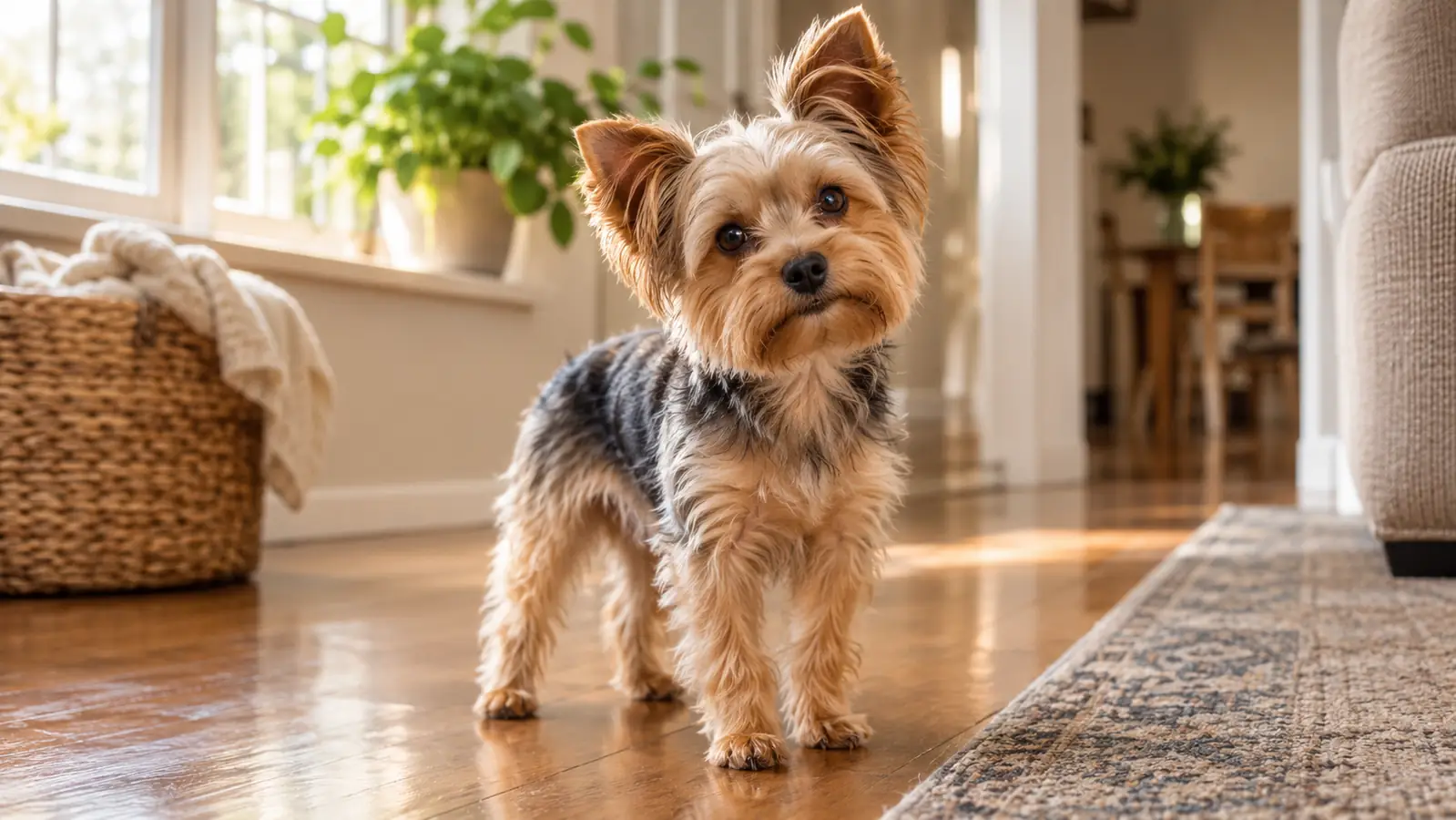
Pepper is eleven years old, a miniature Dachshund who weighs about twelve pounds and has a long back that tells her when the weather is about to change. For most of her life she went down the three brick steps to the backyard at a trot. Last spring she started stopping at the top. She would look at the steps, look back at me, and wait. On the hardwood in the living room she began taking short, careful steps, as if the floor might move. I am sixty-six, retired from a car dealership, and I spent enough years listening to engines to know that a small change in how something moves is usually the first sign of a larger problem. Our vet checked her hips, gave us a plan, and told me the same thing I would tell a customer: make the environment easier on the machine. That is how I ended up putting DOK TigerToes socks on a Dachshund who was not thrilled about it.
Non-slip dog socks are not a treatment for arthritis and they are not a replacement for your vet. They are a traction tool. On hardwood, tile, and the worn concrete by the back door, a small dog's paw can slide out from under her before she knows it. When that happens, the joints in the leg, shoulder, and back take the catch. For a dog with a long back and stiff hips, that catch is the thing I wanted to remove. The socks that stayed on and kept their grip through a normal morning were the DOK TigerToes. They gave Pepper a surface she could trust, and they gave me one less thing to worry about while she figured out the steps again.
A Dog Who Trusts the Floor Moves More
Pepper stopped bracing at the edge of the rug once her paws had something to push against. DOK TigerToes are the pair I keep by the back door. Measure the paw, check the chart, and give your dog a few days to get used to them.
Amazon See DOK TigerToes on Amazon →Grip Turns a Slippery Floor Into a Brake
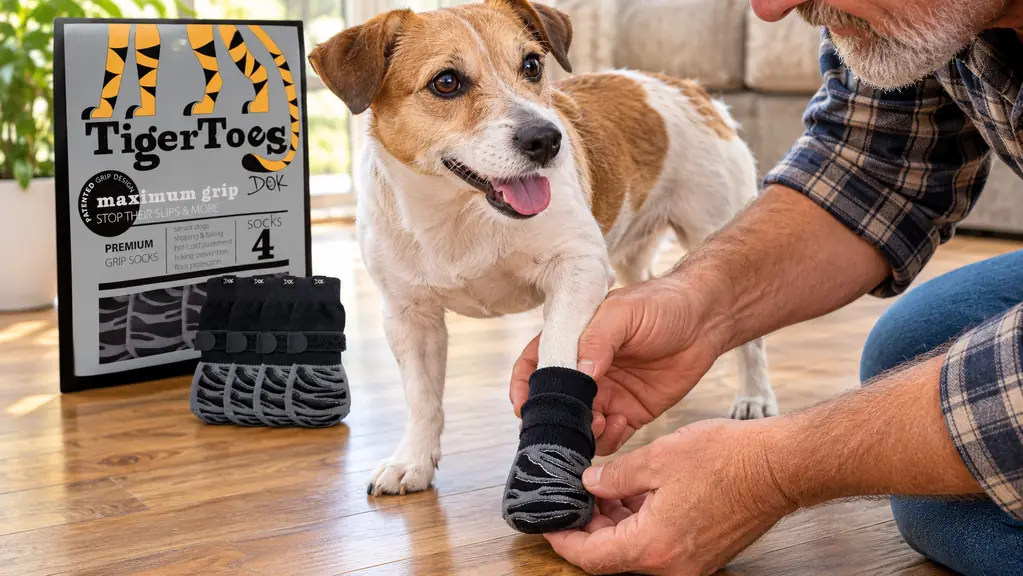
A dog does not need to run to slip. A normal turn at the water bowl can send a small paw sliding. The grip on the bottom of the DOK TigerToes gives her something to push against. I watched Pepper make the turn from the kitchen to the living room without that little skid at the end. The grip is built to keep working even if the sock twists, which matters, because a dog will twist a sock. Traction is the whole point, and these socks deliver it where the paw meets the floor.
Stops the Splay That Jars Elbows and Hips
When a paw slides, the leg goes out to the side. That splay travels up the leg and into the shoulder or hip. For a long-backed dog like Pepper, it can travel into the back too. You cannot stop a dog from turning, but you can give her feet a surface that holds. A non-slip sock is a small correction. It does not fix a joint, but it reduces the number of times the joint gets surprised. Over a week, fewer surprises meant Pepper moved with less hesitation in the house.
Makes the Back Steps Feel Less Like a Cliff
Our back door has three brick steps down to the yard. Pepper used to launch off the top one. After her hips got stiff, she stopped at the edge and waited. With the socks on, she placed one front paw, then the other, and took the steps one at a time. The socks are listed for indoor and outdoor protection, so I did not have to pull them off at the door. I am not going to tell you a sock taught my dog to use stairs. I will tell you the grip gave her enough confidence to try.
Helps Her Get Up Without the Scramble
The hardest part of Pepper's day used to be getting up from a lying position on the hardwood. Her back feet would scramble for a second before she found purchase. That scramble is hard on hips that are already stiff. The grip on the bottom of the sock gives those back feet a place to catch. It is not a lift and it is not a brace. It is just less slipping at the exact moment she needs to push. Some mornings she still takes her time. The difference is the hurry in her feet.
Cuts the Scramble at the Front Door
When the doorbell rings, every small dog in the neighborhood turns into a hockey puck on hardwood. Pepper would try to turn and slide, then bark at the wall instead of the door. The sock grip lets her turn without her feet going out. That one change made the front hall calmer for both of us. I still answer the door. I just do not have to watch her brace for a fall while I do it. If your dog gets excited at the door, this is the reason you will notice first.
Keeps the Paws From Skidding When She Shakes Off
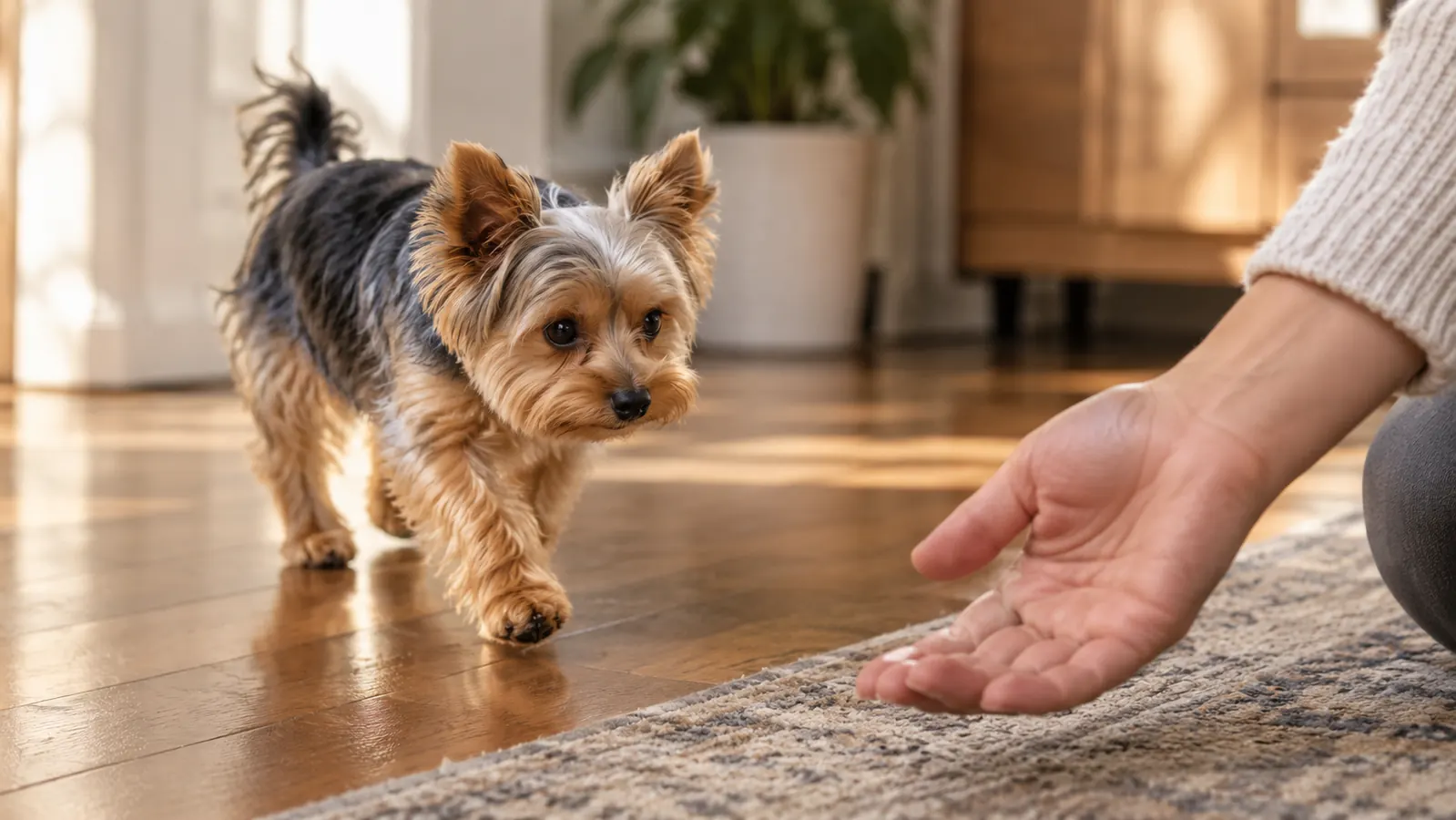
A dog shake starts at the nose and ends at the tail. On a slick floor, the back feet can slide out during the last part. Pepper does this after every walk, and I used to hold my breath until it was over. The socks give her back paws a wider, steadier contact point. She still shakes. She just does not finish the shake leaning sideways like a tipped chair. It is a small thing until you have watched an older dog do it a hundred times.
Adds a Layer Between Paw Pads and Rough Concrete
We walk on a concrete sidewalk in the morning and again before supper. In summer that concrete holds heat, and in winter it gets rough. The DOK TigerToes are listed for outdoor protection, with paw protection for summer. I am not using them to replace a boot on a long hike. I am using them on the driveway and the short stretch to the mailbox. Less flinching on rough ground means Pepper walks more evenly, and an even walk is easier on a stiff hip than a hop.
The Closure Keeps the Sock Where It Belongs
A sock that comes off in the first ten feet is not a traction tool. It is a toy. The DOK TigerToes use a hook and loop closure with a pull-on fit. That combination is what kept the socks on Pepper during a normal morning of walking, turning, and standing at the door. The grip is also built to work even if the sock twists, which it will. Check the paw measurement against the chart before you order, because a poor fit is the main reason any sock fails.
Machine Wash Means You Will Actually Use Them
Daily use means daily dirt. These socks are machine washable, which sounds like a small detail until you have hand washed a tiny sock in the kitchen sink for the third time in a week. I keep one pair on Pepper and one pair in the wash. The pack includes four socks. For a dog wearing two at a time, that is two changes. It is a practical detail, and practical is what keeps a tool in the routine after the newness wears off.
Gives You a Way to Keep the Morning Walk
The real reason I put socks on my dog is not the floor. It is the walk. Pepper and I have a route through the neighborhood that takes about twenty minutes. When she started hesitating at the steps, I worried the route was over. The socks did not cure her hips. They did give her a steadier start to the day. She gets to the door, waits while I put them on, and heads out. If a small dog is slowing down, that is the thing worth protecting: the habit of going.
What I'd Skip
I would skip the indoor booties. They are hot, they are fussy, and most small dogs hate them more than they hate socks. I would skip a house full of throw rugs that bunch at the edges, because a bunched rug is its own trip hazard. I would skip waiting for a limp before I made the floor easier. And I would skip any sock that does not let you measure the paw and check a chart, because fit is the whole game. Do not skip the vet. Our vet is the one who told me to start with traction and keep Pepper moving. The DOK TigerToes are a tool in that plan, not the plan itself.
The morning Pepper walked to the back door on her own and stood there waiting was the first time in months she looked like she wanted to go outside.
Make the Floor Easier Before the Next Slip
If your small dog is hesitating at the steps, scrambling to stand, or sliding through turns, start with the floor. Measure the paw, check the DOK TigerToes size chart, and keep the vet in the loop. Then watch the small things: the turn at the water bowl, the shake after the walk, the pause at the back door.
Amazon See DOK TigerToes on Amazon →