
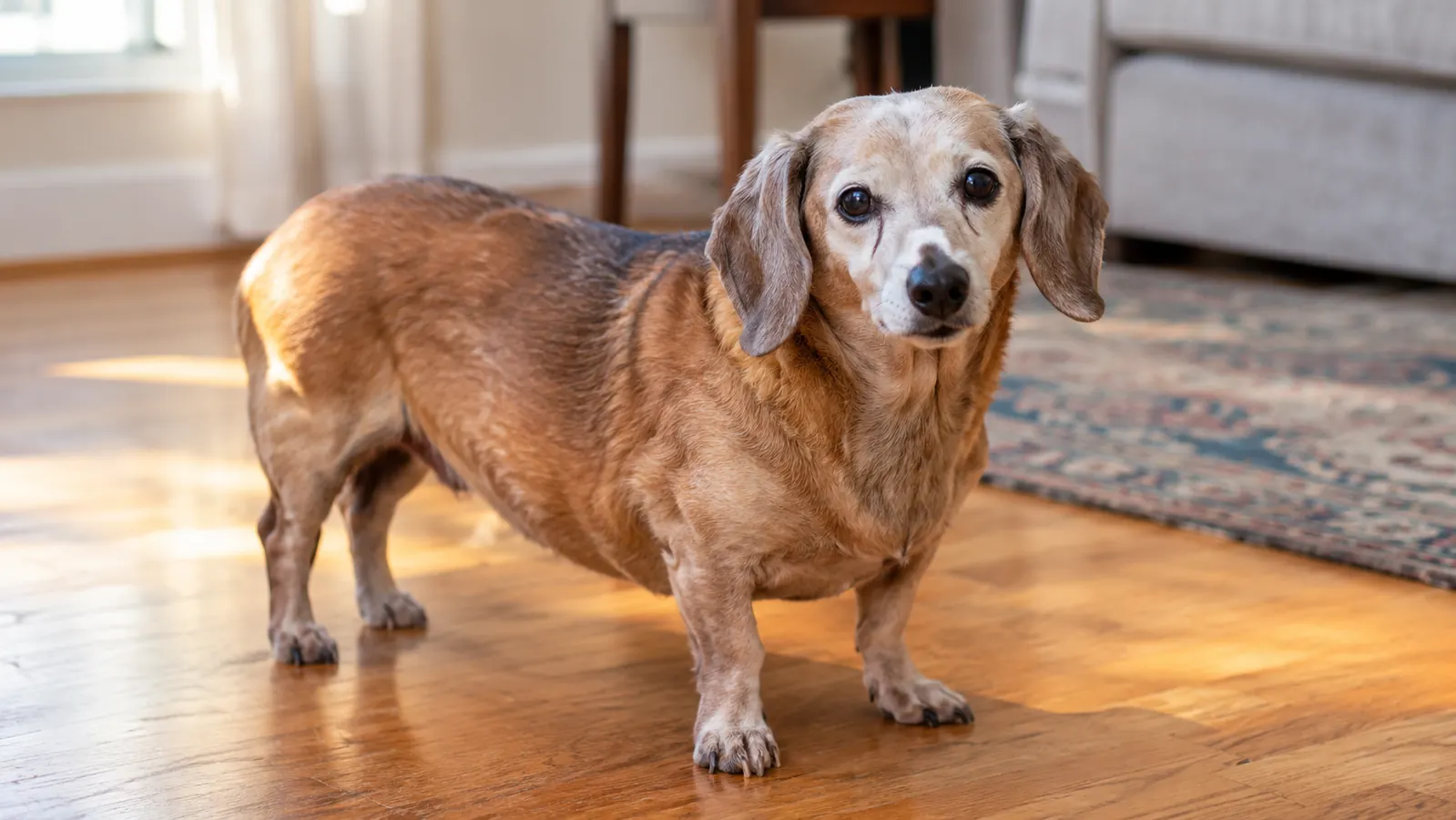
Pepper started stopping at the top of the back steps in April. Not falling, not yelping. Just stopping, looking down at the three brick steps to the yard, and taking a second to decide about it. She is eleven, a miniature Dachshund, twelve pounds, with the long back and the stiff morning hips that come with the breed and with the age. I am sixty-six, retired out of the service department at a car dealership, and I have listened to a few thousand people describe a symptom over the counter. The habit that sticks is finding out what is actually wrong before you start replacing parts. What was wrong with Pepper on those steps was traction. Her hips were part of it. The slick hardwood was the other part.
What I ordered was a four-pack of DOK TigerToes Premium Non-Slip Dog Socks, ten weeks ago. Before that I tried the free fixes, the way anybody would. A runner rug in the hallway, which she walked around. A folded towel at the bottom of the steps, which slid out from under her. I read up on toe grips, the little caps that go over the nails, and did not care for what I found about keeping them stuck to a dog that is up and down off the couch all day. A sock covers the whole foot and fastens with a strap. That seemed like the more honest piece of hardware. Here is what happened over ten weeks, in order, including the parts that did not go right.
The Quick Verdict
The grip is real and it survived ten weeks of daily wear plus the washing machine. The strap takes a little practice and the sizing has to be measured, not guessed. For a small dog slipping on hardwood, that is a fair trade.
Amazon Check Today's Price →The pair that lives by my back door
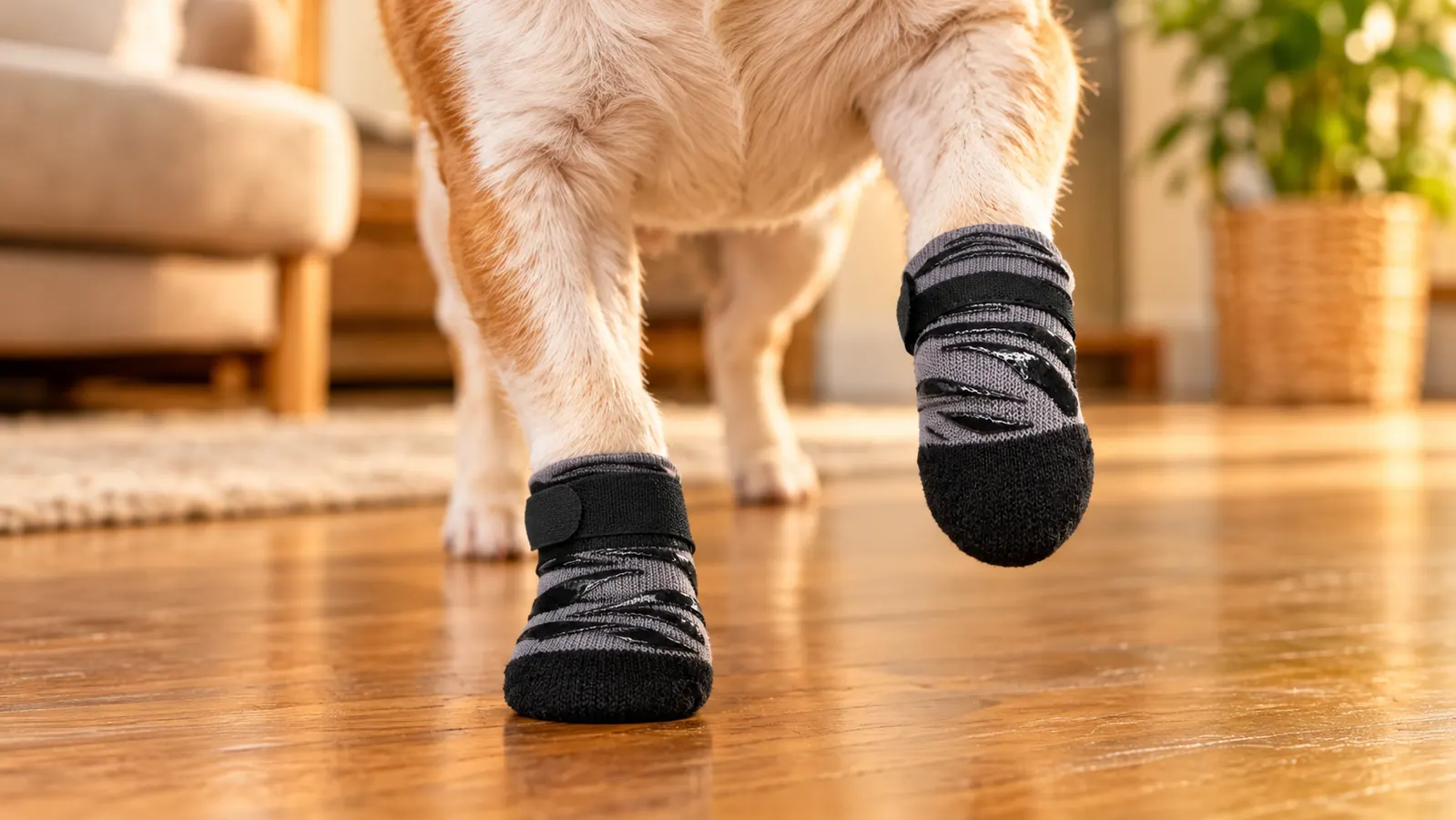
Four socks per pack, a hook and loop strap over the ankle, cotton and nylon blend, machine washable. I keep two on Pepper and two in the laundry. That rotation is the whole system.
Amazon Check Today's Price on Amazon →How I've Used Them
Putting them on the first time took four minutes and most of Pepper's patience. There is a pull-on sleeve, and then a hook and loop strap that comes over the top of the ankle, and the strap is the part that decides whether this works. Too loose and the sock walks itself off somewhere in the hallway. Too tight and she fusses at it and lifts that foot higher than the others. I got the tension wrong twice. The right tension is snug enough that you can slide one finger under the strap and no more, and I check it every time before we head for the door.
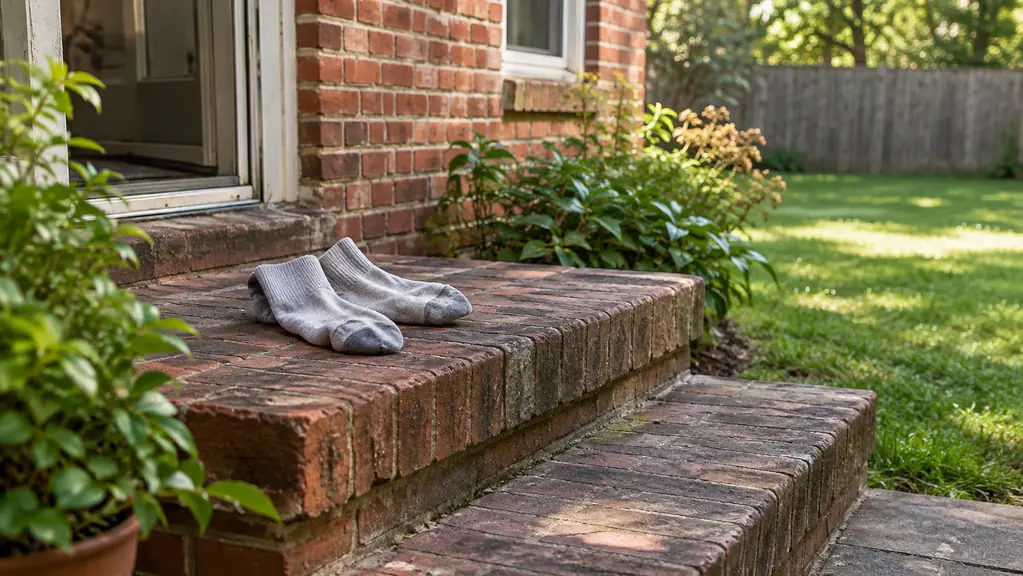
The routine now is this. Socks on before the morning walk and before the evening one, and on anytime she is going to be on the hardwood for a stretch. Off for sleeping, off on the rug, off for anything wet. DOK lists these for indoor and outdoor protection, and I have used them on the brick steps out back, but for a full walk on pavement I take them off. A sock is not a boot and I am not going to ask it to be one. Doing that would wear the grip out in a month and I would be back at the beginning.
She is not a dog that tolerates costuming. She will sit for a bath and she will not sit for a hat. The first day she did the stiff-legged walk dogs do, lifting each foot higher than it needs to go, and I figured I had wasted the money and told June so. By the third day she was walking normally in them. By the second week she was standing at the door waiting while I put them on, which is the only review that counts with a dog. June watched the whole production that first morning and told me I was making a fuss over nothing. Then she watched Pepper go down the steps without the pause, and she stopped saying that.
What the Grip Does on Hardwood
Here is what I watched for, because I am a mechanic by temperament if not by trade anymore. On bare hardwood, a small dog with a long back pushes off with the back legs and the front feet skate. It is not always a fall. Most of the time it is a scramble, a correction, a hesitation. Pepper scrambled getting up off the couch and she scrambled turning in the kitchen, and after a while she stopped turning in the kitchen. That is how a dog solves a slick floor. She quits using part of it.
With the socks on, the scramble is gone. She pushes off and the foot holds. The change I noticed first was not speed, it was confidence. A dog that is worried about her feet takes short steps and stops at the top of the stairs. A dog that trusts her feet takes the stairs. Somewhere in the second week she started going down those three brick steps without the pause, and I stood in the yard like a man watching an engine catch on the first turn of the key.
DOK says the grip is built to hold even when the sock twists on the foot, and ten weeks in I can confirm both halves of that. The twisting does happen, usually after an hour or so of wear, and the grip still works when it does. What I will not tell you is that this fixes a joint. It does not rebuild a hip and it does not take the place of a diagnosis. If your dog is hesitating on stairs, dragging a back foot, or yelping when you lift her, that is a vet appointment first and footwear second. Our vet is the one who told me to keep Pepper's weight down and keep her moving, and these socks are in service of that advice. They are not a substitute for it.
One more note about where the floor matters. Grip helps most where the dog lands, and a small dog lands on the front feet coming off the couch and on the back feet going up the steps. That is why I put the socks on for both directions and not just for the walk. It takes thirty extra seconds and it is the difference between her still using the couch and her giving up on it.
She stopped at the top of the steps that first morning. By the third week she was going down them like she had somewhere to be.
The Fit Is the Whole Ballgame
The single most useful thing I can tell you is to measure. DOK sizes these by paw width in inches, not by breed and not by weight, so the ruler job is on you. Put the dog's foot flat on a table, lay a ruler across the widest part of the paw, and write the number down before you order. The size I tested is listed for paws 2.5 to 2.8 inches across, and there are other sizes in the same line. Guessing costs you a return and about two weeks of a dog still sliding around the living room.
The strap is hook and loop, so it adjusts at the ankle, and that adjustment absorbs a lot. What it will not do is rescue a sock that is a full size off. Mine took one measurement and one exchange before I had a set that sat still, and I count that against my guessing, not against the product. If the sock is sliding around the paw all day, the strap is doing work it was never meant to do and it will not last the season.
One fit note that surprised me. Pepper's back feet sit a little narrower than her front, which nobody tells you and which I had never had a reason to notice. The strap handled it, but if you have a dog with wide front paws and narrow back ones, put the snugger pair up front and save yourself the fussing. And check the strap after the first ten minutes of the first wearing, because a strap that felt right on the kitchen floor can work loose once the dog has been up and down the hall a few times.
Ten Weeks of Wear
Ten weeks in, here is the condition report. The grip surface on the two pairs we rotate is worn at the toe, which I expected, but it has not gone smooth. They have been through the washing machine more times than I can count, because a dog sock in a house with hardwood floors and grandchildren on Sundays is a dog sock that needs washing. The cotton and nylon blend has not shrunk and has not come apart at the seams. One strap started to curl at the edge around week seven, and it still fastens flat when I press it down.
What has not held up perfectly is the elastic at the ankle on the oldest pair. It has relaxed some. Not enough to come off during the day, but enough that I now put that pair on for indoor time and save the newer pair for the brick steps out back. If you are buying one pack and wearing it daily, plan on a fresh pack every few months. Four socks per pack helps, because one is always in the wash and one is always drying.
The other thing worth saying is that these are not invisible. Pepper walks a little like she is wearing socks, because she is. On a hard floor that is the whole point. On a rug she does not need them, so I take them off, both to make the grip last longer and to let her feet get air. A dog left in them all day, every day, is a dog whose feet never breathe, and I do not think that is good for anything. A chewer left alone with them will get through them, so this is a supervised item in our house.
Socks Versus Toe Grips
Toe grips are the other thing people try. They are small caps that go over the nails, and the appeal is obvious: the dog is barely wearing anything. The complaint is equally obvious, which is that they come off, and a dog that has lost one cap is walking crooked, which is worse for her than walking on a slick floor. They also leave the pad uncovered, and the pad is the part making contact with the hardwood. I did not run a side by side test in my own house and I am not going to quote somebody else's numbers as if I had. What I can tell you is that a sock covers the whole foot, stays on with a strap, and goes in the wash.
There is a tradeoff in the other direction and I want to be straight about it. A sock is more hardware on the foot, it runs warmer, and a dog with a skin problem between the toes should not be living in one. We use them for the floor and take them off for the rug, and that balance has held for ten weeks. If you want that argument laid out longer, I go through it in the piece on dog socks versus toe grips for small dogs, and the ten reasons piece covers why the floor matters to the joints in the first place.
What I Liked
- Grip holds on bare hardwood, including when the sock twists on the paw after an hour of wear
- Hook and loop strap kept the sock on through a full day of walking and stairs
- Four socks per pack, so you can keep two on the dog and two in the laundry
- Machine washable cotton and nylon blend with no special care required
- Pepper went from hesitating at the back steps to taking them without a pause in about three weeks
Where It Falls Short
- Sizing is by paw width in inches and has to be measured, not guessed from breed or weight
- The ankle elastic relaxed after about two months of daily wear
- A determined chewer will get through them if you leave them on unsupervised
- They do nothing for the joint itself, only for the floor under it
Who This Is For
This is for the owner of a small dog on smooth floors. Hardwood, tile, laminate, vinyl plank, the polished concrete in a sunroom. If your dog hesitates at stairs, scrambles getting off the couch, or does that ticking walk across the kitchen where the nails click and then slide, a sock with real grip addresses the floor half of the problem. It suits a dog that will tolerate something on the foot, and most will after three or four days of acting insulted. It suits the owner who is willing to measure a paw and set a strap properly, because that small effort is the difference between a sock that works and a sock in a drawer.
Who Should Skip It
Skip it if your dog will not tolerate anything on the feet and you have already fought that fight and lost it. Skip it if what you need is footwear for pavement, snow, or road salt, because this is a grip sock and not a boot and the listing does not pretend otherwise. Skip it if the problem is pain rather than slipping. A dog that yelps, knuckles over, or drags a back foot needs our vet's office, not a package from Amazon. And skip it if you want to put something on once and never think about it again. The strap needs a check, the size needs a measurement, and the socks need washing. It is a little work, but it is work, and I would rather tell you that now than have you find out in the hallway at seven in the morning.
If your dog is hesitating at the stairs, start with the floor
Four socks per pack, hook and loop strap over the ankle, machine washable. Measure the paw across the widest part, set the strap snug, and give it three days before you decide anything.
Amazon Check Today's Price on Amazon →