
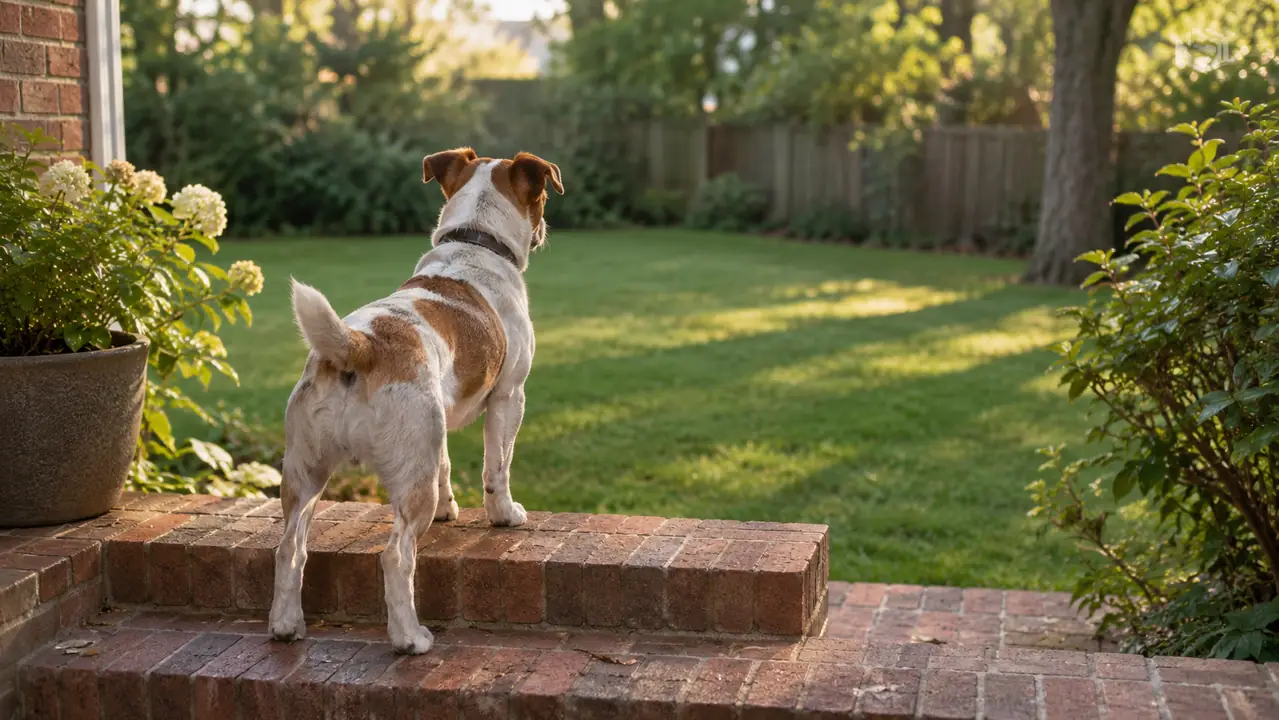
The first time Pepper stopped at the top of the back steps, I figured he was being careful. He is an 11-year-old miniature Dachshund, about twelve pounds, and he has never been a bold dog. But he stopped again the next morning, and the morning after that, and by the end of that week he was standing at the edge of the couch for a good ten seconds before he would try the jump. That is the part that gets you. Not a yelp, not a limp, just a small dog doing arithmetic about a piece of furniture he used to clear without thinking about it.
I did what most people do first. I picked him up more. I moved his bed closer to the hallway. I blamed the cold snap we had in January. None of that is wrong exactly, but none of it is a plan either. What changed things was a conversation with our vet and a bag of Nutramax Laboratories Cosequin for Small Dogs soft chews, run alongside a routine so plain I could have done it half asleep. Six weeks later Pepper was taking all three brick steps again without stopping, and the long pause at the couch was down to about a second. This is that routine, step by step, in the order I would do it again if I had to start over tomorrow.
Buy the small-dog bag, not the big-dog bottle
Cosequin for Small Dogs comes as soft chews, 45 to a container, with glucosamine hydrochloride, sodium chondroitin sulfate, MSM and omega-3 fatty acids. Get the size that matches your dog, then start Step 2 and leave it alone for six weeks.
Amazon Check Today's Price on Amazon →Step 1: Get a diagnosis before you buy a single chew
Small dog stiffness is not one condition. It can be arthritis in a hip, a disc problem in the back, a torn knee ligament, or even a nail pressing into the pad that makes every step hurt. Dachshunds carry a long back on short legs, so the list of suspects runs a little differently than it does for a Lab. Our vet walked his hands along Pepper's spine, worked each hip through its range while watching Pepper's face, and asked me four questions I could not answer because I had never written anything down. That is where the routine actually starts.
For one week before the appointment, write down what you see. Which leg does he favor when he first stands up? Does the stiffness clear in five minutes or does it hang around for an hour? Is the hard part the three steps down to the yard, or the jump up onto the couch? Is he worse after a nap or after a long walk? Bring that page with you. A vet can do far more with a week of real observations than with a memory of your dog looking slow lately.
If the answer comes back as ordinary wear and tear, joint support belongs in the plan. If it comes back as something else, that plan comes first and the chew waits. I am not a veterinarian. I am a retired service manager who spent thirty years listening for the difference between a rattle and a real problem, and a stiff dog deserves the same careful treatment.
Step 2: Start the soft chews, then leave them alone
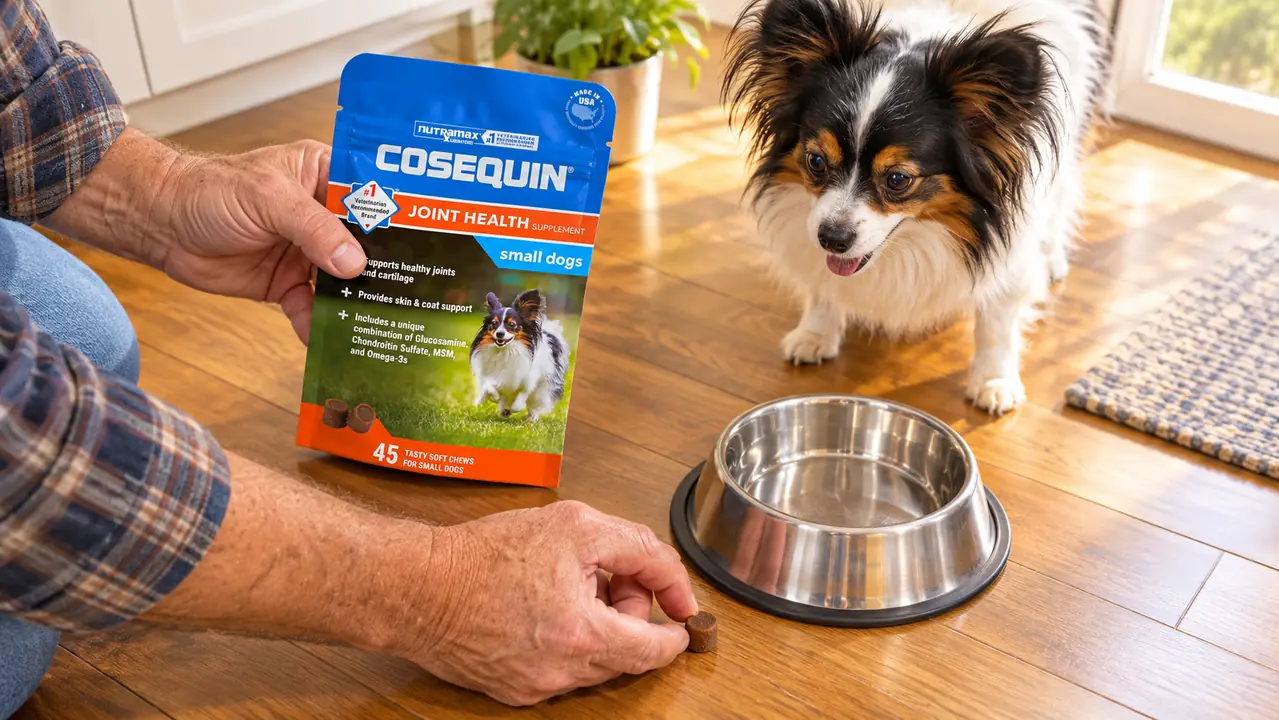
Cosequin for Small Dogs is a soft chew, 45 to a container, and the small dog formula is the one to buy if your dog is in that size range. The active ingredients are glucosamine hydrochloride, sodium chondroitin sulfate, MSM, and omega-3 fatty acids, which also do work on skin and coat. The listing describes Nutramax Laboratories as the number one vet recommended retail joint health supplement brand, and the company has been in pet health for more than 25 years. The chews contain fish, so if your dog has a fish allergy, ask your vet before you open the container.
The mistake I made early was treating it like a pain pill. I expected something in three days. Supplements do not work that way. They build, and while they build, your job is to stop changing variables so you can tell whether anything is happening at all. Same time every morning, same spot, same dish. I set Pepper's chew on the floor beside his bowl at 6:40, before our walk, and I gave the amount our vet worked out for his weight. I never doubled it on a bad morning. Follow the label and your vet on the amount, not a stranger's enthusiasm on a forum.
Two practical notes. The container lives on the counter next to the bowl, not in a cupboard, because a routine you cannot see is a routine you forget. And when we are away from the house for a morning, the chew rides in a small bag in the console of the Enclave and gets given at the same time it always does. Twice now I have forgotten it, and both days felt off from start to finish, which tells you how much of this is simple habit.
Give it four to six weeks before you form an opinion. That is the honest window. And keep the notes from Step 1 going the whole time, because a slow gain is close to invisible day to day and plain as day on paper.
Step 3: Fix the house before you blame the dog
Our house is a one-story brick ranch with hardwood in the living room, and hardwood is slick under small paws. I put down two runners, one from the kitchen to the front door and one alongside the couch. The change was immediate and a little embarrassing, because Pepper had been doing a sliding shuffle across that floor for months and I had walked past it every single day without putting it together.
The three brick steps to the backyard got a ramp on one side and a wide block step on the other. Not every dog will use a ramp, so give two options and let the dog pick. The couch got a low stool with a nonskid top. If your dog is hopping down onto a hard floor several times a day, every landing is a small jarring event, and stopping that costs a lot less than one vet visit.
Two smaller things people skip. Trim the nails, because a long nail changes how the foot lands and quietly changes the whole leg above it. And keep the bedding out of the draft by the door, because a dog that sleeps cold and damp will be stiff in the morning no matter what is in the bowl.
The Enclave sits high enough that Pepper cannot hop in on his own, so he rides in a crate in the back and gets lifted out rather than jumping down onto pavement. A dog that drops out of a vehicle onto concrete is doing exactly the thing you spent all week trying to prevent. Same for the porch. Same for the tailgate of anybody else's truck.
By week six Pepper was taking all three back steps without stopping. Same dog, same steps, same 7 a.m. walk. The only thing that changed was the routine.

Step 4: Shorten the walk, never skip it
We walk twice a day, morning and evening, and I was not going to give that up without a fight. What I did instead was cut the distance roughly in half and let Pepper set the pace. A stiff dog that lies around all day gets stiffer. Gentle, regular movement keeps the joint moving and keeps the muscles around it doing their job. The first five minutes are a warm-up, so let the dog sniff and wander. Do not march him straight up a hill from a cold start.
Watch the next day, not the same day. If a longer walk makes the following morning worse, that walk was too long. If the following morning is the same or better, you found your distance. One variable at a time, the way you would chase an intermittent fault in a car. Change two things at once and you learn nothing.
And cut the jumping. No launching off the porch after a squirrel, no leaping down from whatever he decides to climb on. A twelve-pound dog with a long back can do real damage over a short drop, and if you allow it, that drop happens twenty times a day.
Weather matters more than I expected. On cold mornings Pepper is slower for the first block, and I let him be slow. Rushing a stiff dog into a fast pace is how you turn a stiff morning into a sore week. If it is below freezing, or the pavement is hot enough to hold your hand on, the walk gets shorter still and the sniffing gets longer.
Step 5: Keep a thirty-day log on the fridge
This is the step people skip, and it is the one that decides whether you keep going. A sheet of paper on the fridge, one line a day. Three items: how many minutes the morning stiffness lasted, how many of the three back steps he took without stopping, and whether he tried the couch step on his own. That is the whole form.
Thirty days gives you a pattern instead of a feeling. You will see plateaus, small climbs, and the occasional bad day that means nothing. Mine looked like noise for three weeks, and then the step count started holding at three out of three and the minute count fell from around twenty to under five. Take the sheet to your next vet visit. You will get a much better conversation out of it than you would from 'he seems a little better.'
One more column I added late: the weather. Cold, damp mornings are worse for Pepper, and I wanted to know whether a rough week was a flare or a front moving through. It turned out to be the front most of the time, which kept me from tearing up the whole plan every time the temperature dropped.
The log also protects you from your own optimism. When you are spending money every month on a chew, you want it to be working, and that is exactly the moment to read a number instead of trusting your mood.
What Else Helps
Keep the weight where it is. Twelve pounds on a long back is already a load, and one extra pound on a small dog is proportionally like twenty on a person. Warm bedding, a sweater on cold mornings if your dog will wear one, and a recheck with our vet every six months so the plan stays current instead of frozen in time. Do not stack three joint products without telling your vet what you are giving, because the ingredients overlap and more is not automatically better. The omega-3s in the Nutramax Laboratories chew are part of the point, but they are not a license to pile four other things on top.
Know what counts as a same-day call. A sudden yelp, a dragging foot, a refusal to eat, a dog that cannot get comfortable, or stiffness that shows up overnight in a dog that was fine yesterday. That is not a supplement question. That is the clinic, today.
What I would tell you over the fence is this. You are not going to rebuild an eleven-year-old dog's hips. You are going to buy him easier mornings, and easier mornings come from small things done the same way long enough that they start to count.
Same chew, same time, six full weeks, then read the log
Cosequin for Small Dogs, soft chews, 45 count. Pair it with the runners, the shorter walks and the sheet on the fridge, and give it the whole window before you judge it.
Amazon See the Small Dog Soft Chews on Amazon →