
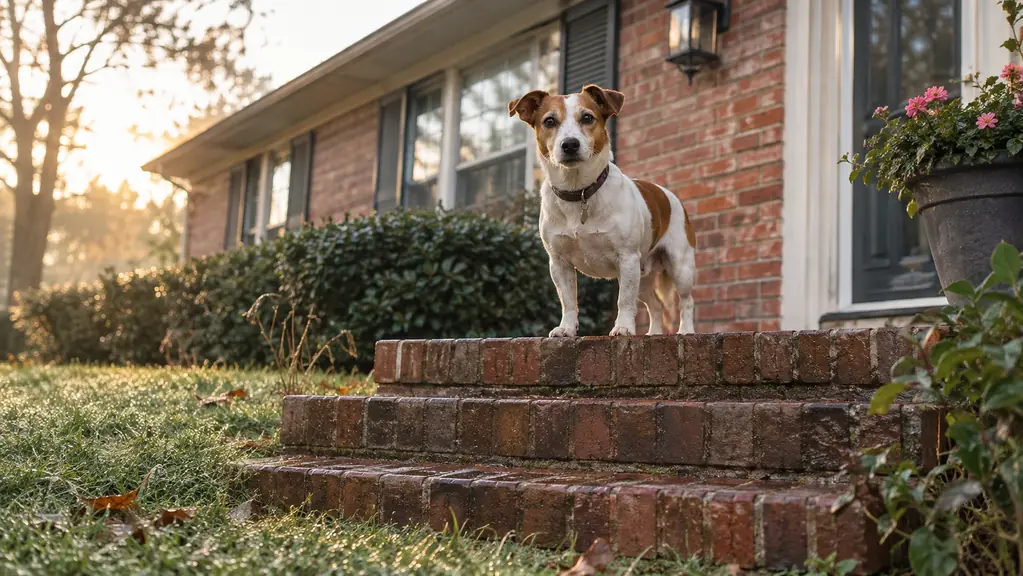
Pepper is eleven, twelve pounds, and a miniature Dachshund, which means he has a long back, short legs, and a stubborn streak that outlasts both. For most of a decade he took the three brick steps down to the backyard at a trot. Last spring he started stopping at the top, looking down, then looking back at me like I might have a better answer. Our vet examined him, called it age and stiff hips, and said the goal now is to keep him moving as long as he can comfortably move. That is where the PICK FOR LIFE lift harness came into our house.
I am not a veterinarian and I am not a trainer. I am a retired service manager who spent forty years watching parts wear and deciding when a repair was worth doing. So I did what I always do. I hung the harness by the back door, used it twice a day, and kept notes for six weeks. Here are ten things it actually changed.
Start with the three steps, not the whole walk
The PICK FOR LIFE rear lift harness is what I put on Pepper before every trip down to the yard. Nylon, about five ounces, machine washable, with a padded handle and a storage bag. Take it to your vet visit and ask what your dog can safely do with support.
Amazon See the harness on Amazon →It lifts the back half without lifting the whole dog
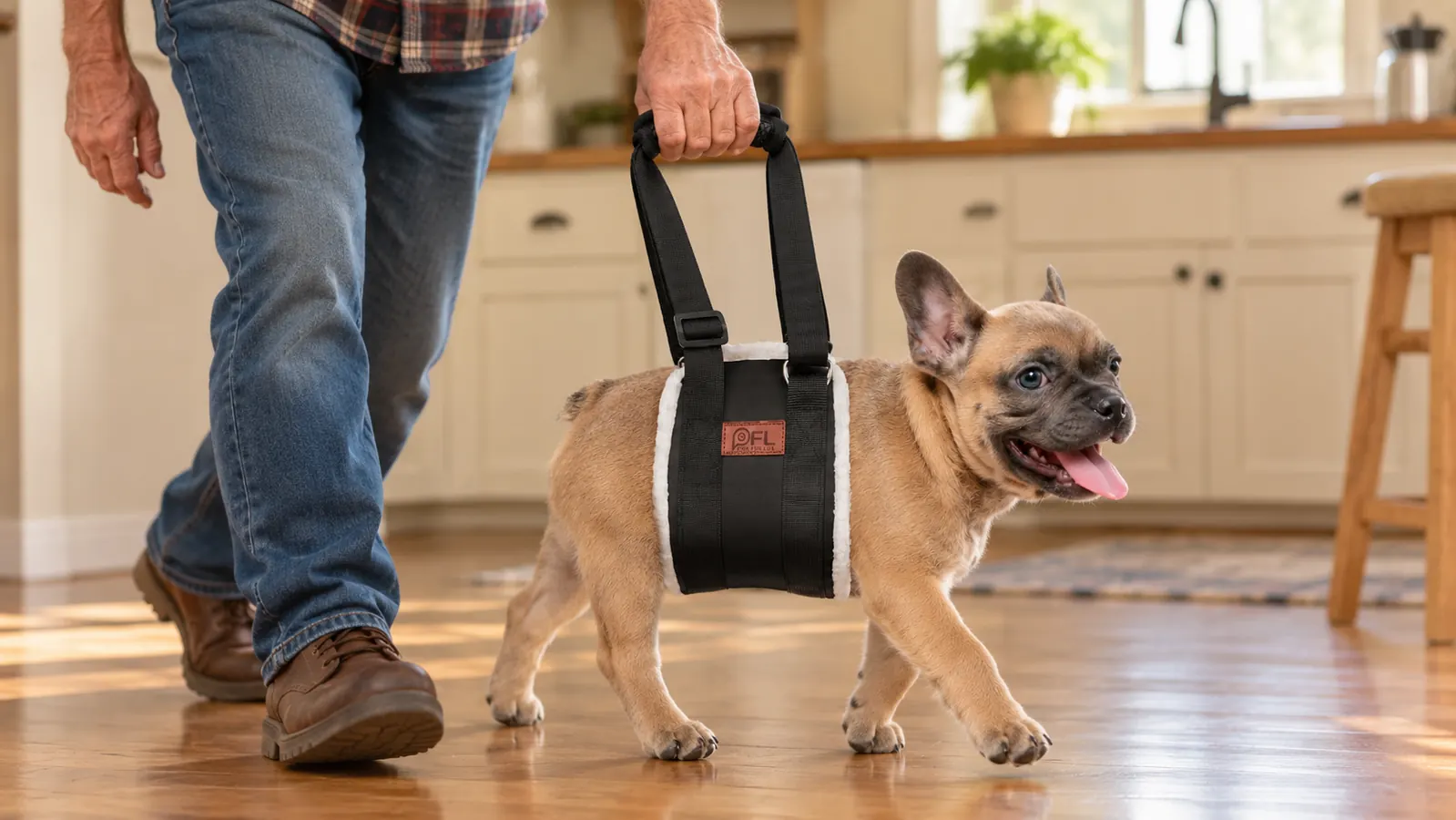
Pepper's front legs are fine. He trots on them like a puppy. It is the hips and the rear that stall out. The harness puts a sling under the hindquarters and a handle above them, so I can take a share of his weight while his feet stay on the ground. He keeps walking on all four. I just carry the part of him that quit carrying itself. That distinction matters more than I expected it to, because a dog who is still walking still believes he is a walking dog.
Three brick steps stop being a wall
My backyard sits three brick steps below the kitchen door. Last winter those steps turned into a negotiation. He would stand at the top, put one paw out, pull it back, and look at me. Now I put the harness on before we reach the door, hold the handle, and let him set the pace. He steps down on his own four feet. I follow with maybe three pounds of him in my hand. Same steps. Different morning.
Morning stiffness gets a bridge instead of a barrier
At 6:40 in the morning his hips are the stiffest they get all day. Before the harness, that first trip outside was the worst one, and some days he skipped it and paid for it later. Now I give him support for the first twenty or thirty feet and he loosens up. By the time we reach the mailbox he is pulling ahead of me again. The stiffness is still real. It just does not get to decide whether the day starts with a walk.
You keep the two walks you already take
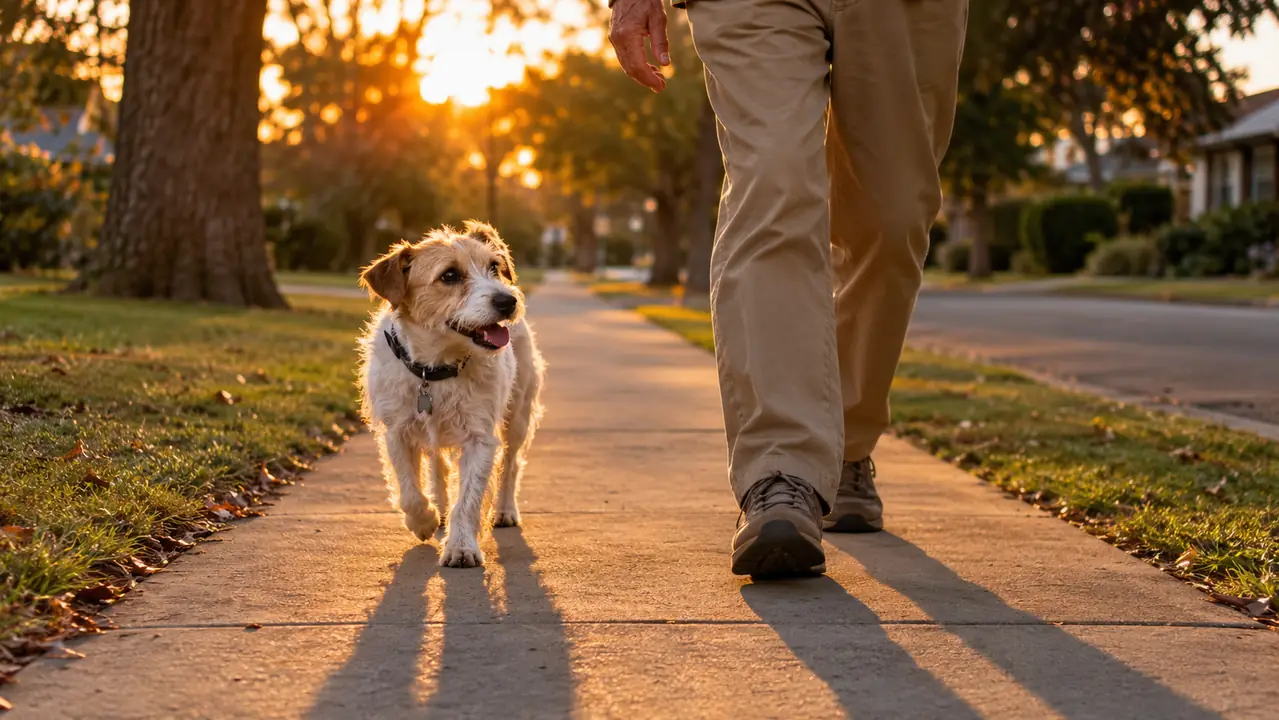
We walk twice a day, morning and evening, and we have for years. When he started struggling I did what most people do. I shortened the route. Then I shortened it again, and by February we were doing a lap around the driveway and calling that a walk. The harness let me put the distance back, a little at a time. We are not doing the old two miles. We are doing more than we were in February, and it happens twice a day, every day.
Your hand stops doing the scooping
For a while I carried him up the steps with a forearm under his belly. If you have done this, you know the rest. He hates it. He wiggles. Your arm cramps. And it teaches him that being picked up is what stairs mean now, which is a hard lesson to unlearn. The harness gives my hand something to hold that is not the dog. He still walks. I still help. Nobody gets scooped.
The handle keeps your own back out of the equation
I am sixty-six. Bending over a wiggling twelve-pound dog forty times a week is how a man my age ends up at the chiropractor instead of the park. The handle sits at a height where I can take the weight with my arm instead of folding myself in half. The grip is padded, which sounds like a small thing until you are holding it through an entire walk. My back has been fine. I cannot say the same for the belly-carry method.
It weighs under five ounces, so it actually gets used
The harness weighs 4.8 ounces and comes with a small storage bag. That reads like a listing detail, not a benefit. It is the reason I use the thing. It hangs on a hook by the back door. It goes into the Buick when we drive to the park. It rides in the console and takes up less room than a water bottle. If a mobility aid is a production to deploy, you stop deploying it. This one is not a production.
It adjusts down to a twelve-pound frame
It is adjustable and it is sized small, which is the right combination for a little dog with a long back. A one-size sling on a dog this size slides or bunches, and a bunched sling is worse than no sling. I set the straps once in April and have not touched them since. Measure your dog before you order, though, because adjustable is not the same word as universal.
It goes in the washing machine
Nylon and machine washable matters more than it should. This harness rides under the dog, near the ground, through a Georgia spring. It gets dirty. Mine has been through the wash several times and the stitching and the handle have held up. I let it air dry on the porch rail. If a piece of equipment has to be hand washed and spot cleaned, it lives in the closet. This one gets used because keeping it clean is not a chore.
It shows you what your dog can still do
Here is the part I did not expect. Six weeks of using it twice a day taught me things about Pepper I could not have described before. He bears weight on the left rear longer than the right. He does better on the hardwood than on the brick. He is stronger in the evening than in the morning. That is information I now carry into every vet visit. A harness does not diagnose anything. It lets you watch your dog do more, and the watching is worth something.
What I'd Skip
What I would skip is treating any harness as a diagnosis or a cure. It is neither. Pepper still has stiff hips. Our vet is still the one who decides what is going on and what to do about it, and I would tell you the same thing over the fence. I would also skip leaving it on him all day, skip buying it as a substitute for an exam, and skip expecting a rear lift harness to fix a front-end problem. It lifts the back half. That is the whole job, and done well it is enough.
Six weeks in, Pepper takes the three brick steps down to the yard on his own four feet. I just carry about three pounds of him while he does it.
Pepper still takes his own three steps. He just takes them with a hand on the handle.
The PICK FOR LIFE lift harness is a nylon rear sling with a padded handle, a storage bag, and a machine washable build. It has held up through a Georgia spring and two walks a day. Start with your vet, then start with three steps.
Amazon Check today's price on Amazon →