
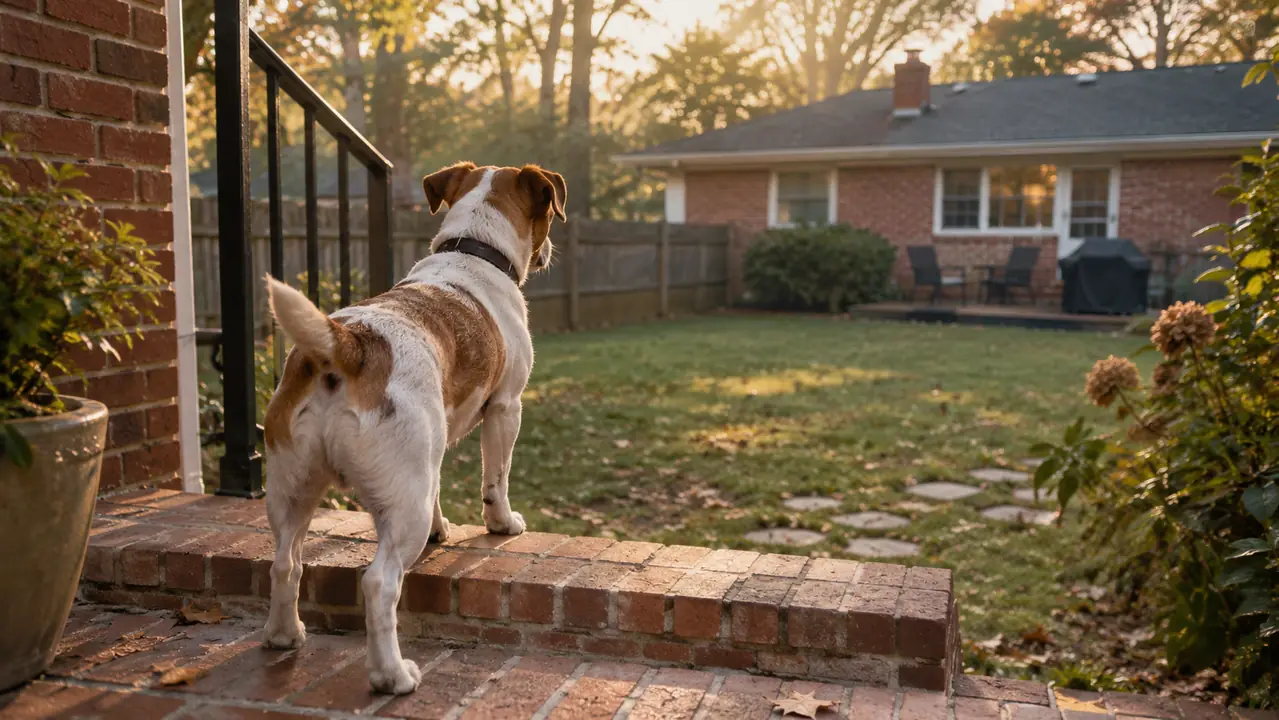
Pepper is eleven years old, twelve pounds, and built like a breakfast sausage with opinions. She is a miniature Dachshund, which means a long back and hips that stay stiff until about nine in the morning. The three brick steps off the back of our ranch used to be nothing to her. Now she stops at the top, looks down at the yard, and looks back at me. That look is the reason I started paying attention to how I move her.
So I did what I did for thirty years in a dealership service bay. I watched the thing behave before I trusted it. There are two ways to get a small dog from here to there: lifting with the PICK FOR LIFE adjustable dog lift harness, or carrying her in my arms. The short answer, after a few months of both, is that carrying works for four feet and stops working past that. The PICK FOR LIFE harness is a nylon sling with padded handles that takes the rear end while the dog keeps walking on her own. On stairs, on walks, and at the back step at six in the morning, the harness is the better tool. On the couch, my arms are still faster.
| PICK FOR LIFE Lift Harness | Carrying Your Dog | |
|---|---|---|
| Setup | Sling under the rear, handle up, adjust once to the shape of the dog. A few seconds after the first try. | None at all. Bend, scoop, go. |
| Duration | Your arm hangs at your side instead of curling under a dog, so a full walk is realistic. | Twelve pounds gets heavy about a block and a half in. |
| Support | Fabric spreads the load under the belly and rear instead of four fingers digging into one spot. | Arms cradle unevenly and the dog slides toward your elbow. |
| Stairs | The dog keeps stepping while you take part of the weight, so the legs keep working. | You carry the whole dog, so the legs do nothing at all. |
| Your back | You stay upright with your hands near hip height the whole way down. | Bending and twisting with a wriggling dog at chest height is how a Saturday ends in ice packs. |
| Short hops at home | Works for the couch, though it is more gear than the job really needs. | Your arms are already there and there is nothing to adjust. |
| A dog in acute pain | Only useful if your vet says the dog can still take some weight. | Full support in your arms is the right call when the dog should not bear weight at all. |
| Keeping it clean | The nylon sling is machine washable. | Your jacket is not. |
| What it changes over time | Keeps the dog using her legs on the days she would otherwise quit. | Nothing. It is a workaround, not a support. |
| Tells you what is wrong | No. | No. |
How I Compared Them
I did not run a lab test. I ran a routine. Pepper gets two walks a day, and the route covers the three brick steps, a stretch of sidewalk, and a slow loop past the neighbor's mailbox. For a couple of weeks I lifted her by hand at the steps and at the couch. For the next couple I used the sling. I kept a note on the refrigerator with two columns and wrote down what she did, not what I felt about it.
The columns were simple. Did she hesitate at the top step. Did she take the step on her own. Did she sit down halfway around the block. How did my back feel the next morning. June added a third column about how much I complained, which turned out to be the most consistent data in the house.
Before either of those, I tried to build my way out of it, which is a habit of mine. First was a bath towel folded into a sling under her belly. It got us down the three steps once. Cotton has no handle, so I was gripping bunched fabric with both hands and no leverage, and on the second morning she stepped out of it sideways and sat down on the top step in protest. Next was a wide canvas belt, which is fine for a front end lift and useless for a rear end, because the whole problem is behind the back legs. I stopped improvising after that. A real sling with a real handle does the one thing the homemade versions could not: it puts something solid in my hand directly above the spot that needs holding.
Two things showed up fast. The dog does better when she keeps her feet moving, and I do better when I am not holding twelve pounds at chest height while bent forward. The sling is not a wheelchair and it is not a cure. It is a hand that takes part of the weight so the legs can keep doing their job.
Where the PICK FOR LIFE Lift Harness Wins
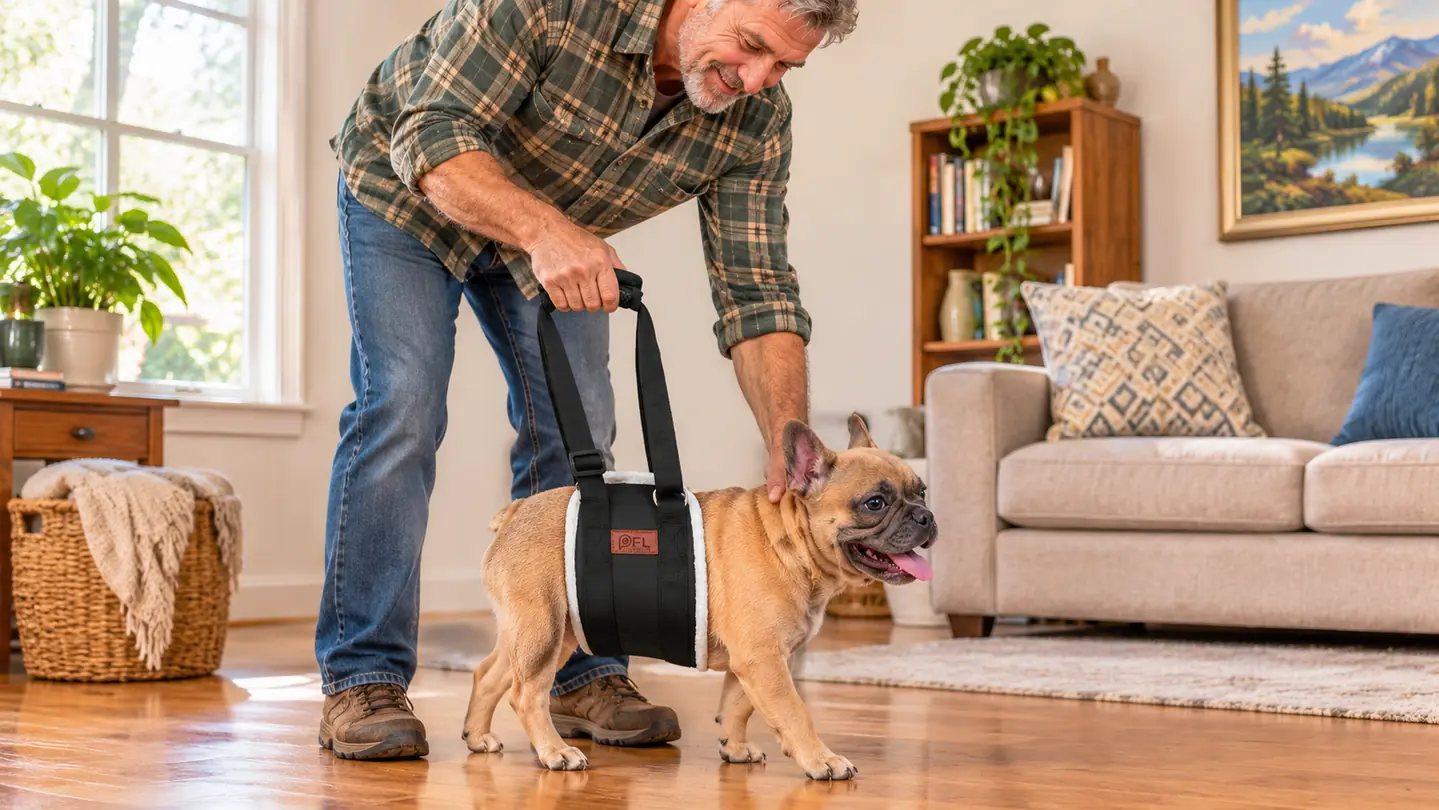
The first win is duration. Padded handles mean my hand closes around fabric instead of curling under a dog's belly, and my arm hangs at my side where it is strongest. When I carry Pepper, I hold her against my chest and my shoulders creep up around my ears inside a block. With the sling, we finish the loop. That is the difference between a dog who walks twice a day and a dog who walks once.
There was a Thursday in April that settled it. Pepper got maybe forty yards down the sidewalk and stopped, the way she does when the rear end has decided the walk is finished whether I agree or not. I carried her back the whole way, and by the time we hit the driveway my lower back was talking to me. Two days later we did the same distance with the sling and made the full loop. She walked the last stretch on her own because the sling had carried the middle stretch. Forty yards of help bought us a quarter mile of walking, and she slept better that night than she had in a week.
The second win is even support. The PICK FOR LIFE sling passes under the rear end and spreads the load across fabric, so no single spot takes all of it. It adjusts to the dog, which matters with a Dachshund, because her shape is not a greyhound's shape. It weighs 4.8 ounces and folds into the storage bag that comes with it, so it lives in the door pocket of the Enclave and rides along to the vet. Nylon, machine washable, which is the one feature I have genuinely tested at home more than once.
Twelve pounds does not sound like much until you have carried it up three brick steps twice a day for a year.
Where Carrying Your Dog Wins
Carrying wins on setup. There is nothing to adjust, nothing to remember, nothing to leave in the wrong room. For the couch, the bed, and the two feet from the kitchen floor to her bed, my hands are already there and the harness is more gear than the job needs. If I am honest, half my lifts in a given day are that short.
Carrying also wins when the dog should not be bearing weight at all. If Pepper yelps, or favors a leg, or our vet has just told us to keep her quiet for a week, then full support in my arms is the correct answer and a sling that lets her step is the wrong one. Same story for a dog who panics in gear. There is no prize for using the equipment. Getting her across the room without pain is the whole job.
And there is a size limit that flatters nobody. Pepper runs about twelve pounds, which is right at the edge of comfortable for me at sixty-six. A sixteen-pound dog carried up a full flight of stairs three times a day is a different job, and I will not pretend otherwise. I also know my own history. I spent three decades leaning over fenders and reaching into engine bays, and the first thing to complain when I lift badly is the right side of my lower back. That is a fact about me, not about the dog, and it is the honest reason I went looking for a tool instead of gritting my teeth.
Let Her Take the Steps While You Take the Weight
Sling under the rear, padded handle up to your hand, dog still walking on her own four feet. Adjustable, machine washable, 4.8 ounces, storage bag included.
Amazon Check Today's Price on Amazon →Stairs, the Couch, and the Enclave
The three brick steps are the hardest part of our day and the place where the sling earns its keep. I stand below her, slide the sling under the rear, and take maybe a third of her weight on the way down. She still steps. That is the point. A dog who stops using a leg loses the strength to use it, and our vet has said that to me more than once, usually while I was nodding too fast to be listening properly.
The couch is where the harness loses, and I will say so plainly. Ours sits about eighteen inches off the floor. Getting her up and down is a bend, a scoop, and a step, and my hands are faster than any sling for that. What actually works is the combination. The harness goes on for the trip from the couch to the back door, comes off once she is on the rug, and goes back on for the steps. Two clips and a handle, about as much fuss as putting on my own shoes.
The Buick is the other spot. She used to hop into the back without thinking. Now she puts her front feet up on the bumper and waits. The handle gives me something to hold while she does the last part herself, and I am not bent sideways over the tailgate with my knees locked. Thirty years of leaning over engine bays taught me what that position costs by the end of the day.
Cleaning is part of the routine, not an afterthought. The sling goes down on the hardwood where she sheds, so it gets washed about once a week along with the dog beds. It comes out of the machine without the handle twisted up, which is more than I can say for most of the gear I have owned.
What the Harness Does and What It Does Not
In the box you get the sling, a handle, a storage bag, and a user guide. That is the whole system. It is not a brace, it does not go on the front legs, and it will not teach a dog to walk again. What it does is let you take part of the rear weight for as long as you are willing to stand there. The listing describes a seven day warranty, so measure your dog and sort out the fit in the first week rather than the third.
It also does not diagnose anything. Pepper's stiffness could be arthritis, could be a disc, could be something else entirely, and no harness on the market tells you which. That is a vet conversation and it should come before the shopping. I say that as a man who once spent a month adjusting a carburetor that needed a fuel pump.
What Owners Report After the First Week
The harness sits at 4.4 stars across more than 6,200 ratings, which tells you it is a working product and not a perfect one. What people tend to describe lines up with what I found. It is easy to put on once you have done it twice, the padded handles are the reason it holds up on a longer walk, and the dog keeps walking instead of being carried.
The pattern in the reviews I trust most is about the dog's attitude rather than the owner's back. A dog who gets carried starts asking to be carried, which is not a moral failing on anybody's part, it is just what happens when the easier path is always on offer. A dog who keeps stepping keeps stepping. Several reviewers describe a dog walking into the vet's office under its own power instead of being carried through the door, and that is a small thing that lands hard when the dog is yours.
The complaints are the ordinary ones. Sizing on a dog who lands between sizes, and the fact that a sling is only as good as the person holding it. If you are not willing to walk at the dog's pace for ten minutes, no harness helps. It is a tool for someone who is going to show up twice a day.
Who Should Buy Which
Buy the harness if your dog still steps but struggles, especially on stairs, in and out of the car, or on the second half of a walk. Buy it if you are the one doing the lifting and your own back has opinions about that. Buy it if you want the dog doing the work with help, rather than being carried around like luggage.
Keep carrying if the distances are short, if the dog is in acute pain or recovering from something our vet would want managed carefully, or if your dog simply will not tolerate anything under the belly. And either way, get the diagnosis first. A harness manages a symptom. It does not tell you what is causing it, and the earlier our vet saw Pepper, the more options we had.
The Porch Conversation
If you stood at the bottom of my steps and asked me straight, here is what I would say. Carrying your dog is not wrong. It is just temporary. It works while the dog is small enough and you are strong enough, and both of those things change on their own schedule. The PICK FOR LIFE sling keeps the dog's legs in the conversation, and that is the part I did not understand until I watched Pepper take the steps herself again. Two walks a day is what I am trying to protect. That is the whole reason the thing stays in the car door.
Two Walks a Day Is Worth Protecting
Adjustable nylon sling, padded handle, 4.8 ounces, storage bag included. Measure your dog first, then give it a week of short tries before you judge it.
Amazon Check Today's Price on Amazon →