
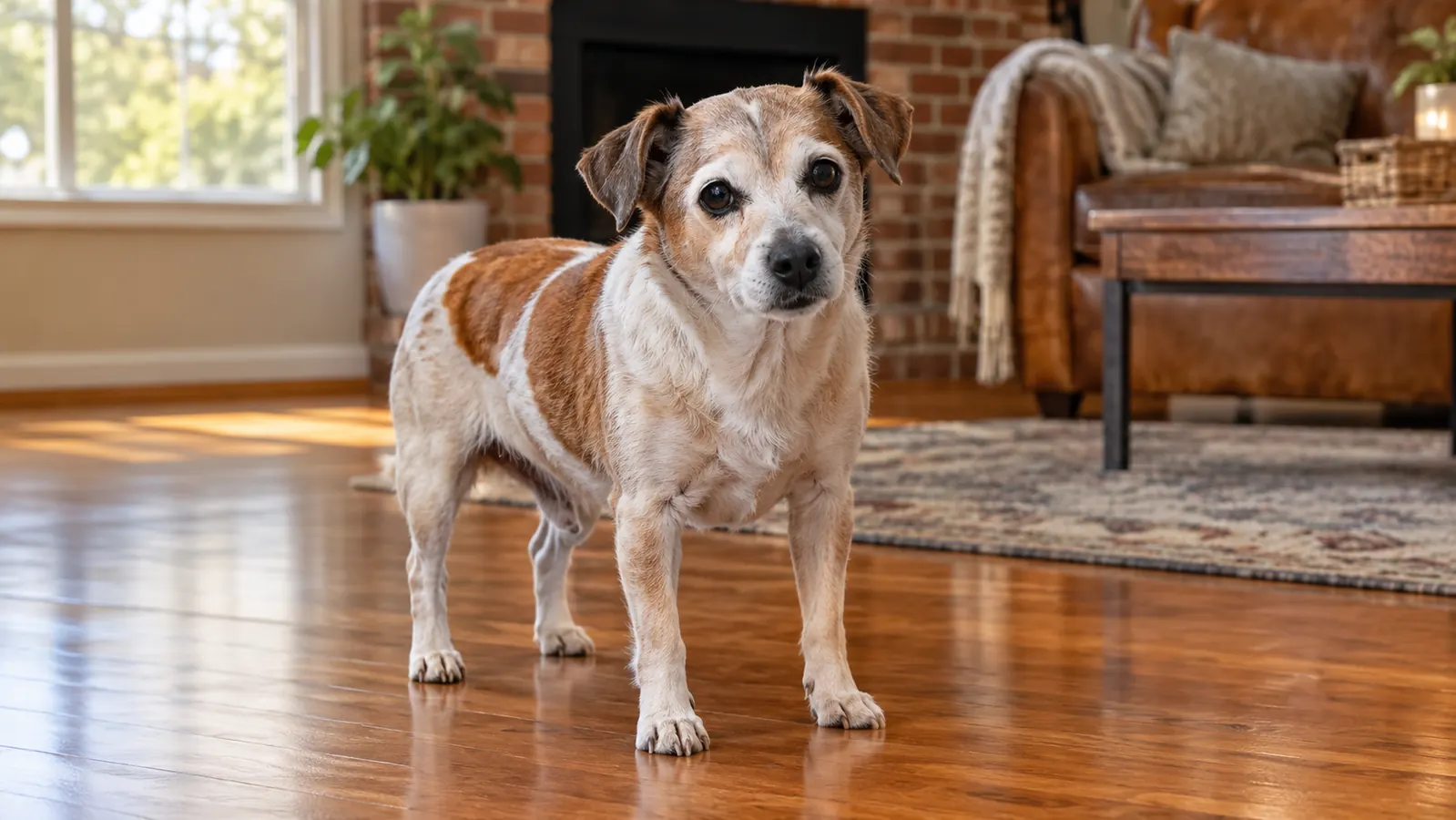
Pepper is eleven years old, a miniature Dachshund who weighs about twelve pounds, and the hardwood in our living room has been down since 1979. Last winter Pepper started stopping at the edge of the rug and thinking about the floor before crossing it. Not limping. Thinking. Twelve pounds on a slick floor with hips that are stiff before breakfast is a real problem, and it is the kind of problem that sneaks up on you, because the dog does not complain. The dog just gets slower and you get used to it. That is what sent me looking at dog socks, and eventually to DOK TigerToes.
I am not a trainer and I am not a vet. I am a retired service manager from Marietta, Georgia, so I judge a product the way I used to judge a repair order. Does it do the job, does it hold up, and how much time does it cost me. I asked our vet about the stiffness first, and the answer was the one you would expect. Keep the weight down, keep the walks going, keep the nails short, and put something with grip under the dog. The DOK TigerToes socks are what I landed on. This is the honest version of how that went, including the parts I did not care for.
The Quick Verdict
Real traction on slick floors and a fit that takes some fiddling. Three weeks in, Pepper stopped balking at the rug, and that is the only result I was after.
Amazon Check Today's Price →The grip is the reason these stayed in the rotation
Four socks to a pack, machine washable, and traction that keeps working even when the sock twists on the paw. That last part is the one I did not believe until I watched it happen on my own floor.
Amazon Check Today's Price on Amazon →How I've Used Them, Week by Week
I measured Pepper's front paw while Pepper was standing and putting weight on it, across the widest part, which came to just under one and three quarter inches. That measurement is the whole reason this is not a review about sizing going wrong. The listing runs by paw width, and if you measure a dog sitting down with the paw relaxed and the toes bunched, you will get a smaller number and a sock that walks itself off in the hallway. Measure standing. Measure twice. I put the first pair on a Thursday morning before our walk, which was my second mistake, because I then spent twenty minutes watching a dog walk around the kitchen like the floor had turned to ice.
Week one was rough in a way that had nothing to do with the socks. Pepper walked stiff-legged, tail down, giving me a look that said this was a betrayal and that June and I would be hearing about it. A dog that has never worn anything on its feet has to learn where its feet are again, the same way you walk differently in a new pair of boots. What got us through it was putting the socks on ten minutes before we needed them, letting the dog wander the rug and the kitchen, and not making a production out of any of it. Suitcase out, socks on, walk. That was the whole trick.
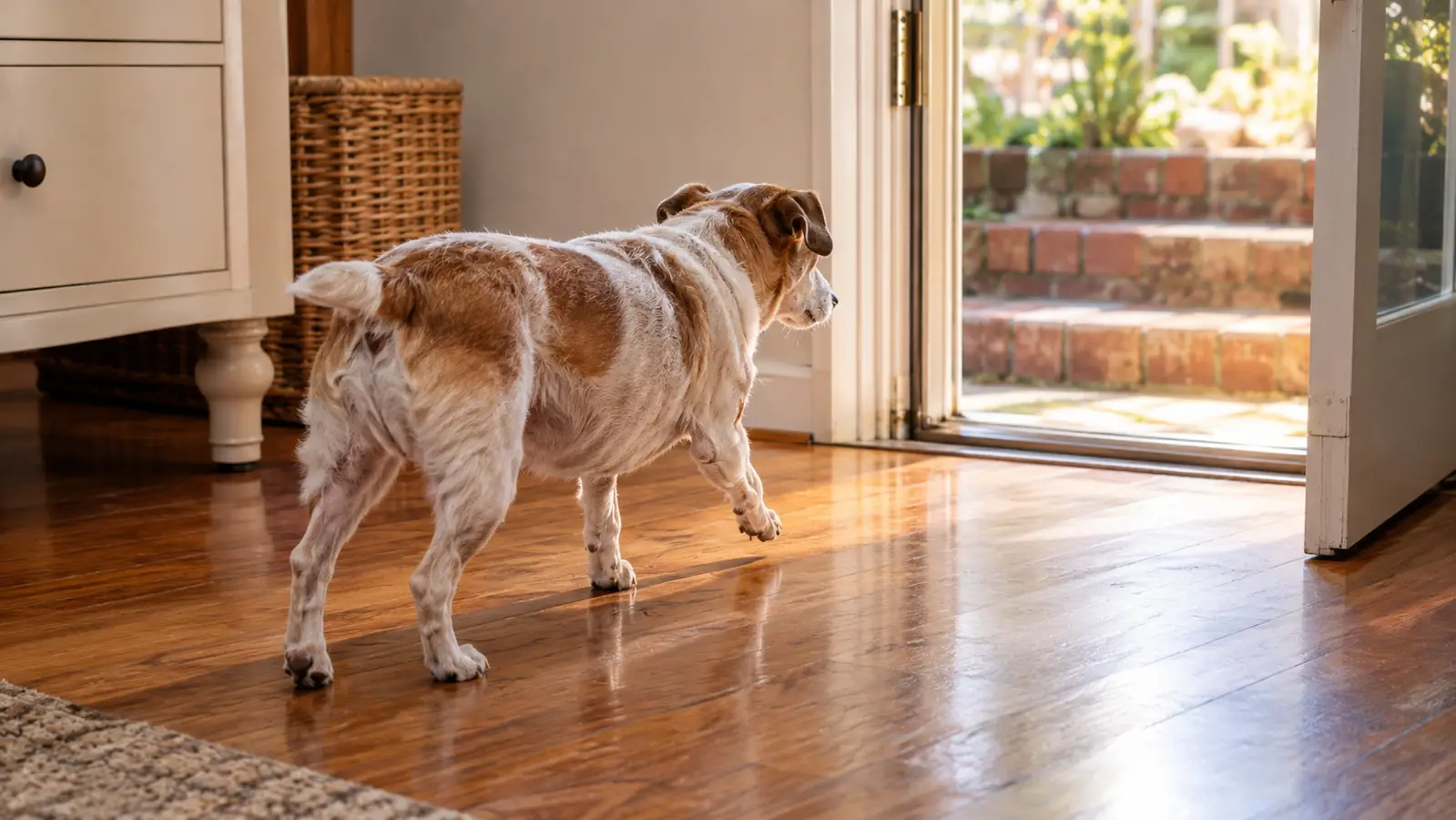
Week two was when they started doing the job. Pepper crossed the living room to the back door without the stop-and-think at the rug edge. It was not dramatic and Pepper is not a puppy again. It was that the hesitation went away, and the hesitation is what worried me most, because hesitation on a slick floor is how a small dog ends up down and hurt. June noticed it before I did. She was standing at the sink and said the dog is not doing that little shuffle anymore. Once she said it I could not unsee it.
By week three we had a routine. Socks on after breakfast, before the morning walk and again before the evening one, off for the afternoon. I keep them in a bowl by the back door the way I used to keep a rag and a wrench by the bench, because a thing you have to hunt for is a thing you stop using. It takes under a minute to put all four on now. The first week it took me five, and two of those minutes were the dog's fault and three were mine.
What the Grip Actually Does on Hardwood Floors
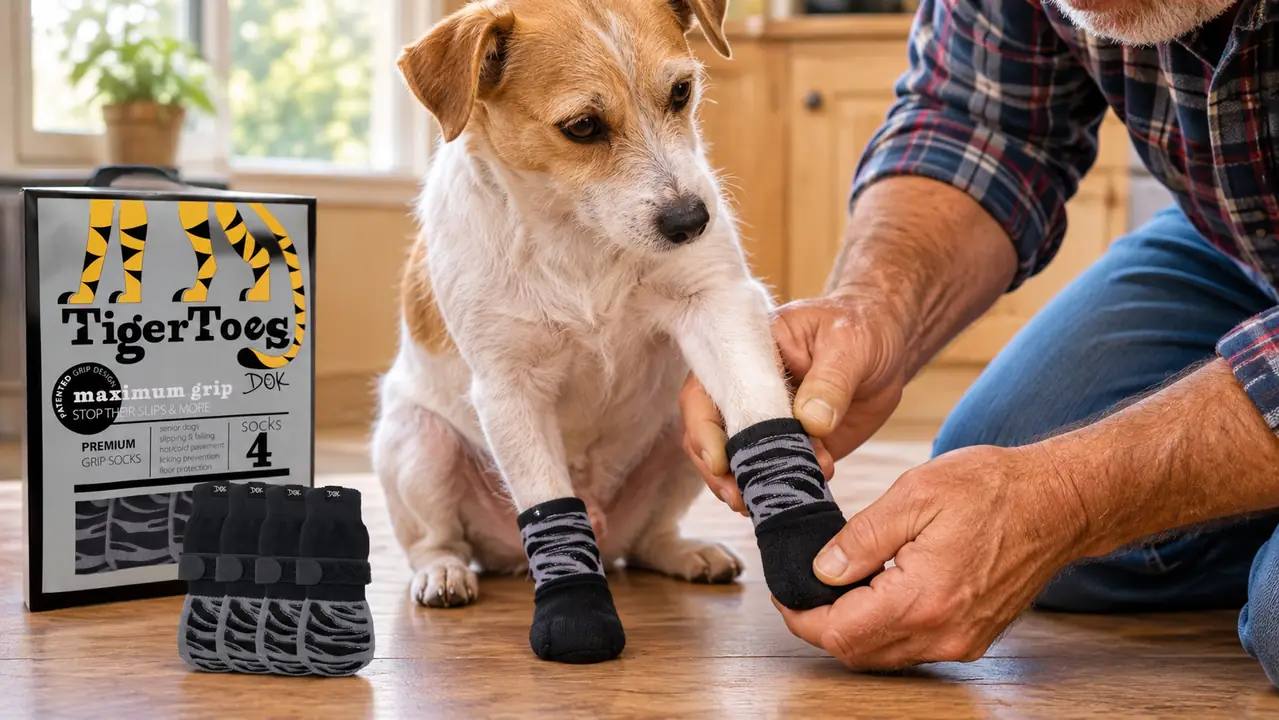
Here is what I did not expect. The sock twists. On a small dog with a narrow paw, a sock rotates as the dog walks, and my first thought was that the grip would end up on the side of the foot where it does nothing. The listing says the grip is built to keep providing traction even if the sock twists while the dog is wearing it. I read that as marketing. Then I watched it happen on our floor. The sock on the back left rotated a quarter turn and Pepper kept walking without a slip. Whatever that grip surface is, it does not need to be perfectly centered to do its job, and that is more than I can say for the stick-on products I tried before this.
On bare hardwood the difference is real and it is not subtle. Put a plain cotton sock on a small dog and the floor becomes a skating rink. The grippy sole grabs, and Pepper's stride looks like a walk instead of a series of small recoveries. Our floor is original hardwood, shiny, and it has a slight slope near the hallway where the house has settled since 1979. That slope was where Pepper used to lose footing on the turns. It is not an issue now.
I also tried a pair of those soft booties with the rubber dots, and I will save you the money. The dots wore flat in about three weeks and the booties turned into regular socks with a story. The DOK socks have not done that. The grip is still there after regular washing, and I have washed these more times than I can count.
On the three brick steps down to the backyard, the socks help going down and are a nuisance coming up, because the grip catches the edge of the brick and the toe drags. I take them off at the door now. The listing describes them for indoor and outdoor protection, and I do not doubt they are fine on a sidewalk or in a driveway, but on brick steps in a Georgia August with the grass wet, a fabric sock is going to be a wet fabric sock. They stay inside. That is not a flaw in the product. It is me using the right tool for the right surface.
The Fit Is the Whole Ballgame
The closure is a hook and loop strap at the ankle over a pull-on sock, and the strap is the part you have to get right. Too loose and the sock walks off in the hallway and you find it three days later under the couch. Too tight and you will see it in how the dog stands and how the dog walks, and you will feel about two inches tall. I check the strap by sliding one finger under it. If a finger goes under without forcing, it is right. It took a few days of getting it wrong in both directions before that became automatic, and I am a man who has set valve clearances by feel for forty years. Give yourself the grace of a few days.
You get four socks in the pack, which is the correct number, because a dog wears four and because socks get lost. We lost one in the first month and I still do not know how. It turned up weeks later in the Buick, which tells you something about my life. Four to a pack means a lost sock is an inconvenience instead of an order, and that matters more than it sounds like it matters when you are the one doing the laundry.
The material is cotton and nylon and the care instructions say machine wash, which is the only reason this product survives in my house. I run them through a normal cycle in a mesh bag with the rest of the laundry and let them air dry on the counter. They hold their shape. The grip has not gone smooth or started to peel. If these had been hand wash only, I would have quit in the first week and so would you, and I would rather tell you that honestly than pretend I have the patience for a special laundry ritual.
One more thing about fit. The listing covers a range of sizes, and the size chart is doing the real work here. If you order by breed or by weight instead of by the width of the paw, you are guessing. A twelve pound Dachshund and a twelve pound terrier do not have the same feet. Measure, write the number on the back of a receipt, and order from that.
The Parts Nobody Mentions
Now the honest part that a five star review would leave out. The strap collects lint and dog hair along the edge of the hook and loop, and after a couple of weeks the closure starts to look grubby even when the sock itself is clean. It still holds. It just looks tired. Two minutes with a pair of tweezers fixes it, but nobody tells you to expect it, and if you are the kind of person who notices that sort of thing, you will notice it.
The first week, Pepper tried to chew them off. Twice. A dog that is not used to something on its feet will mouth at it, and a fabric sock is exactly as durable as a fabric sock is going to be against an eleven-year-old Dachshund with opinions. I did not scold. I redirected, gave it a few days, and the chewing stopped once the socks became part of the morning routine instead of an event. If your dog is a dedicated chewer, this is a real cost and you should hear it from me rather than find out on day two.
They also hold water. Wash them in the evening and they will still be damp on the counter in the morning, so either wash them early or buy a second pack. That is the least glamorous thing in this entire review and it is the thing most likely to annoy you in practice.
And the socks do not fix anything. They change how Pepper gets across the floor. They do not change the hips. Our vet was plain about that and I will be plain with you. Socks are a floor problem solved, not a joint problem solved. If your dog is showing real pain, favoring a leg, or yelping when you lift them, that is a vet visit and not an Amazon order. This is a management tool that buys you time and confidence on slick floors, and it does that one job well.
Where They Fit in a Bigger Plan
I tried the stick-on toe grips before this, and I know people who swear by them. My problem was that they come off, and on a dog that walks twice a day on Georgia pavement, they came off fast. I would find one in the driveway and not know which paw was now bare. The socks stay on until I take them off. That is the trade. More fuss to put on, less fuss to keep on, and for a dog that is out the door twice a day, the second one wins.
The other things that helped were not products at all. Trimmed nails made more difference to footing than anything I bought, and our vet does those. A cheap runner in the hallway so the turn by the kitchen is not bare wood. Shorter walks, more often, instead of one long one that leaves Pepper stiff for the rest of the day. The socks sit on top of all of that. They are not the plan. They are one line item in the plan, and a good one, but a plan with only one line item is not much of a plan.
What I Liked
- Grip holds on slick hardwood, including when the sock rotates on the paw
- Four socks per pack, so one lost sock does not stop you
- Machine washable and they keep their shape
- Stays on through a full walk once the strap tension is right
- Under a minute to put all four on after the first week
Where It Falls Short
- Sizing depends on measuring paw width while the dog stands, and guessing means an exchange
- The hook and loop strap collects lint and dog hair
- Not the right choice for wet grass or brick steps
- A determined chewer can damage them in the first week
- They manage the floor, not the joint
The hesitation at the edge of the rug is what worried me. Three weeks in, it was gone, and that is the whole review.
Who This Is For
Small senior dogs on hardwood, tile, or laminate who have started to hesitate, skid, or take the long way around just to stay on the rug. Owners who will spend a minute a day putting socks on and one evening a week washing them. People who want their dog to keep doing the two walks a day, because that is the thing keeping the legs working in the first place. If you are trying to keep an older small dog moving and the floor is the obstacle, this is a sensible place to spend the money.
Who Should Skip It
Dogs that will not tolerate anything on their feet after a fair week or two of trying, because no sock on earth beats a dog that refuses to walk in them. Households with wall to wall carpet, where the floor is not the problem and the socks are a solution looking for one. Dogs with an undiagnosed limp, because that is a vet appointment and I would rather you spend the money there first. And anyone hoping a sock will treat the joint itself. It will not. What it will do is give a stiff dog a floor it can trust, and on the right morning, that is worth a good deal more than it sounds.
If your dog is thinking about the floor, start here
Measure the paw while the dog is standing and weight bearing, order by width, and give it a full week before you decide. That is exactly what worked in this house.
Amazon Check Today's Price on Amazon →